
Few habits feel as natural as reaching for music at the end of the day. A quiet playlist before bed is something many people do without thinking about it — and it is also one of the more carefully studied uses of everyday listening. Rather than promising anything, it is worth looking at what the research actually observes when adults listen to music around bedtime.
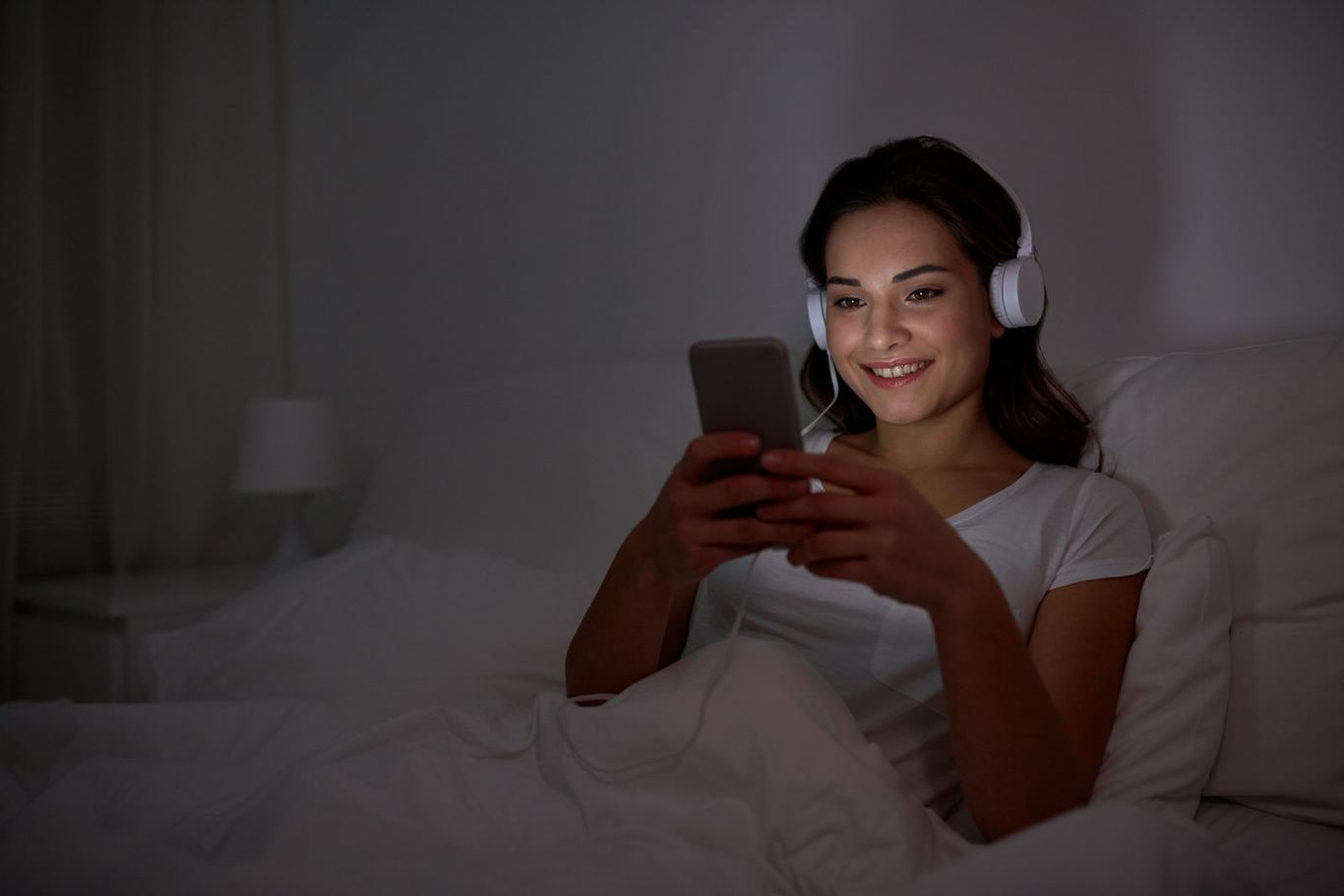
A bedtime habit the research keeps returning to
Sleep is notoriously hard to influence with simple, low-cost habits, which is part of why music has drawn so much scientific attention. It is inexpensive, non-invasive and easy to try, so researchers have repeatedly asked a straightforward question: when adults listen to recorded music at night, does anything measurable change? The answer, across a growing body of trials, is cautiously interesting — though, as always, the details matter more than the headline.
What the studies observe
The most authoritative summary is a 2022 Cochrane review by Jespersen and colleagues, which pooled 13 studies involving 1,007 adults. Participants listened to prerecorded music for roughly 25 to 60 minutes a day, over periods ranging from a few days to three months. The reviewers reported moderate-certainty evidence that listening to music was associated with improved self-reported sleep quality, measured with the widely used Pittsburgh Sleep Quality Index. For other measures — how quickly people fell asleep, total sleep time, sleep efficiency — the picture was less clear, and the authors were careful to note that participants knew which group they were in, which can influence how they rate their own sleep.
A separate network meta-analysis, published in the International Journal of Nursing Studies in 2018, pooled 20 trials with 1,339 adults experiencing primary insomnia and compared several approaches. In that analysis, listening to music ranked as the most effective of the options considered when set against usual care. These are encouraging signals, but they describe averages across varied studies, not a guaranteed outcome for any one person.

Which kind of music the studies tend to use
One useful thread running through this research concerns the music itself. A 2025 narrative review in Frontiers in Sleep looked at the characteristics most often present in the music used in sleep studies. The recurring profile is fairly consistent: a slow tempo, roughly 60 to 80 beats per minute, close to a resting heart rate; soft, smooth melodies; a simple structure that does not invite active listening; and instrumental pieces rather than songs with lyrics. The same review notes that accented beats, percussion and syncopation — the features that make music engaging in the daytime — tend to be deliberately avoided, and that around 30 to 45 minutes of listening before bed was the most common approach.
None of this is a prescription. It is simply a description of what researchers have tended to study, and it happens to line up with intuition: music chosen for the evening is usually quieter and less eventful than music chosen for the morning. The connection between those observations and one’s own routine is something each listener makes for themselves.
How to read these findings
It is worth being precise about what this research does and does not say. To state that a 2022 Cochrane review found moderate-certainty evidence for better self-reported sleep quality is accurate and verifiable. To translate that into “music fixes insomnia” would be to stretch the conclusion well beyond what the studies support. Most of the trials are small, rely on how people rate their own sleep, and rarely follow participants over the long term. The reviewers themselves call for more research, particularly on objective sleep measures and on daytime effects such as mood and concentration.
There is also an important boundary to keep in mind. Persistent sleep difficulty is a matter for a qualified health professional, and music is not a substitute for medical advice or care. What the evidence describes is gentler: a common, harmless habit that, in a number of studies, has been associated with people feeling they slept better.
A quiet end to the day
Perhaps the most honest way to sum up the research is that it takes seriously something people have always done. Winding down with slow, familiar, unobtrusive music is an old habit, and the studies suggest it is not merely pleasant but worth investigating — while stopping short of grand claims. If there is a thread here, it is that the evening asks for a different kind of listening than the rest of the day: slower, softer, and content to fade into the background as the lights go down.
Sources
- Cochrane Database of Systematic Reviews — Jespersen et al., Listening to music for insomnia in adults (2022). 13 studies, 1,007 adults; moderate-certainty evidence for improved self-reported sleep quality.
- International Journal of Nursing Studies — Can music improve sleep quality in adults with primary insomnia? A systematic review and network meta-analysis (2018). 20 trials, 1,339 adults.
- Frontiers in Sleep — Elements of music that work to improve sleep: a narrative review (2025).
Created with the help of artificial intelligence.
