
Music therapy for children is, first and foremost, a practice of relationship. Sound, rhythm and the voice are not used as “remedies” but as instruments through which a trained professional builds contact — a way of meeting a child where they are, with a language that comes before words. Around this idea a growing body of research has taken shape, worth telling for what it actually observes.
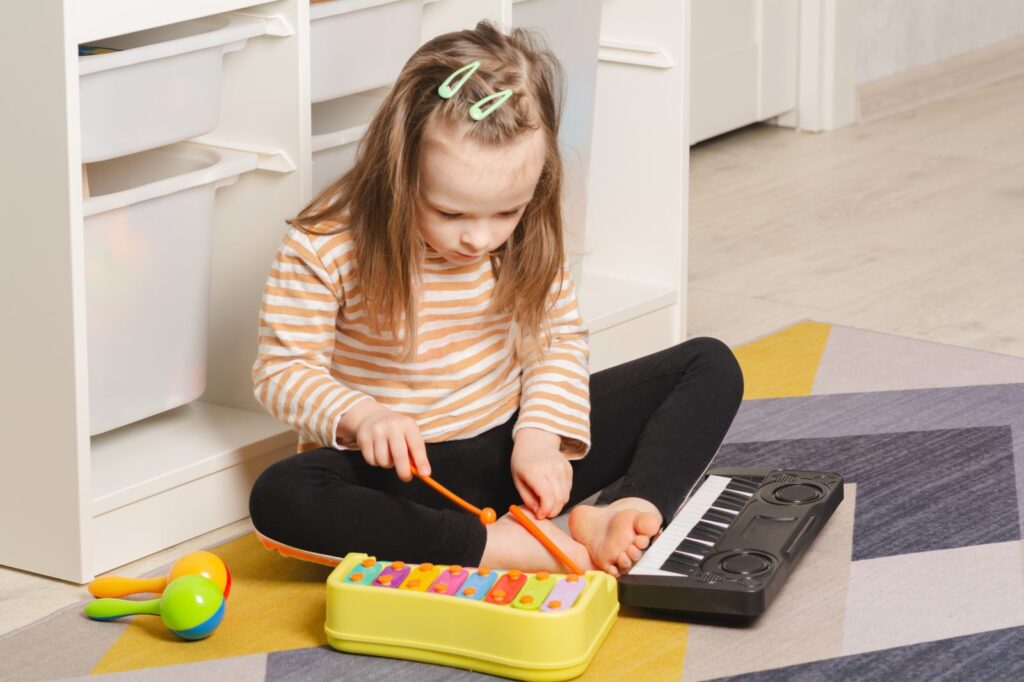
A language before words
Long before speaking, a child listens: in the womb they perceive a heartbeat, a rhythm of breathing, the vibrations of a voice. Music therapy for children starts here, from the idea that rhythm, melody and voice are already forms of communication that carry meaning. The therapist observes how a child responds to a sound, a pause, a change in intensity, and builds an exchange on those responses. It is worth being clear from the outset: music therapy is a discipline carried out by trained professionals, with defined goals and settings. It is not the same as listening to a relaxing song, and most of the research below concerns structured interventions in clinical or educational contexts.
Sound in the first days of life
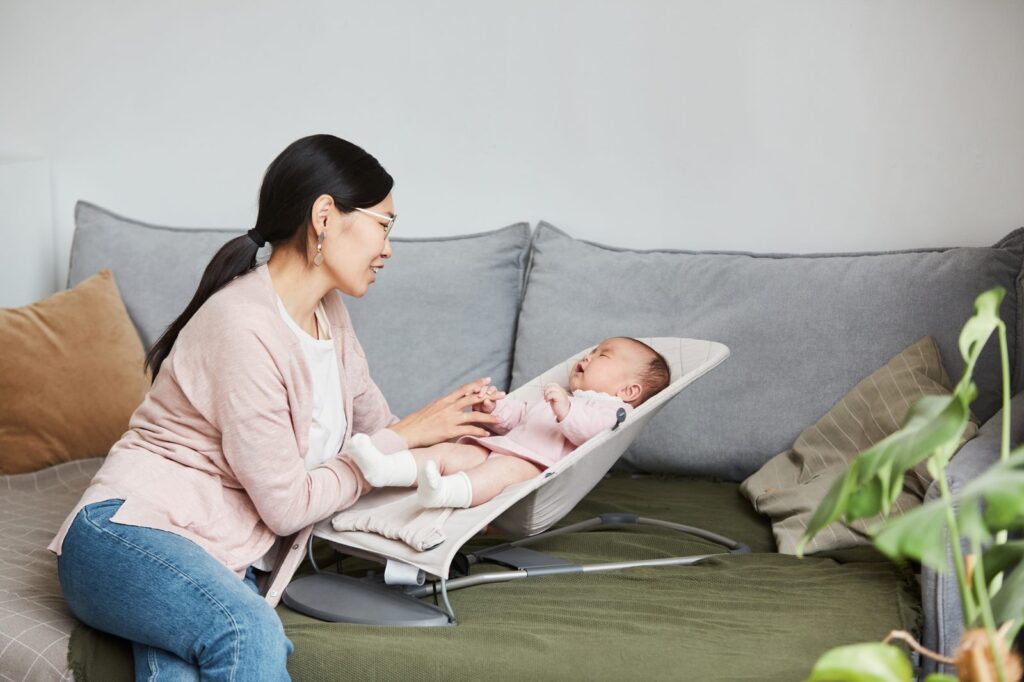
One of the most studied settings is the neonatal intensive care unit. A review published by the Italian Society of Paediatrics points to a meta-analysis by Shahbazi and colleagues covering thirty randomized studies (about 1,855 premature infants), in which musical interventions were associated with measurable changes in parameters such as oxygen saturation, heart and respiratory rate and sleep — with a pattern the authors describe as compatible with a dose-response relationship, while urging caution on other fronts such as pain. The same review notes how music can enter developmental-care pathways not only as a stimulus to the newborn but as a relational practice and early support for parenthood.
The familiar voice holds a special place. A randomized study published in 2024 in Frontiers in Psychology, involving 99 premature infants and their parents, compared live music therapy combined with physical contact against standard care. The authors report that, at four weeks, parents who had received the sessions showed lower salivary cortisol levels — a measure often associated with stress — than the control group, alongside a reduction in perceived stress. They conclude cautiously, describing the intervention as potentially useful and non-invasive rather than as a guaranteed solution. What is striking is that the observed effect concerns not only the child but the bond with those who care for them.
Rhythm as common ground
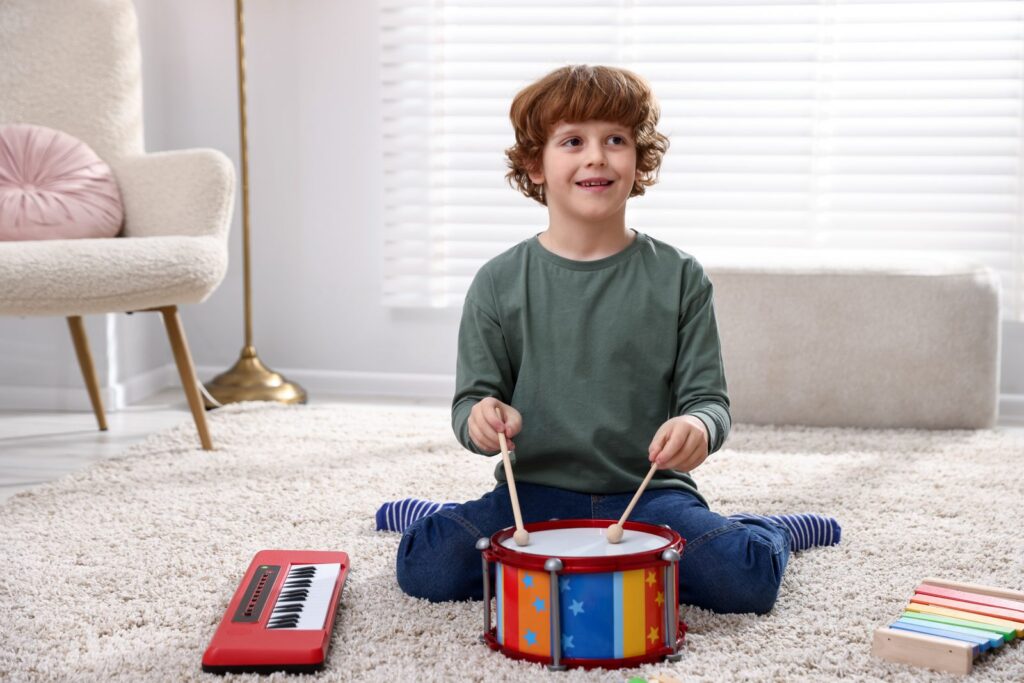
If the voice is the first sound, rhythm is perhaps the first game. Clapping, alternating sound and silence, imitating a sequence: these ask us to tune in to another person, to wait our turn, to respond. It is no coincidence that rhythm sits at the centre of many interventions for children with communication difficulties. A systematic review with meta-analysis published in 2024 gathered 18 randomized studies (about 1,457 children on the autism spectrum) and reports that music therapy was associated with improvements in language communication and social skills, with effects more marked in shorter interventions. These are statistical syntheses of heterogeneous studies, which the researchers accompany with caveats: they do not describe a guaranteed outcome for an individual child, but they help explain why so many professionals find in shared rhythm a way to open a channel when words are difficult.
Music in difficult moments
Another line of research has looked at potentially stressful paediatric-care settings. A systematic review with meta-analysis published in 2022 analysed 38 randomized studies (more than 5,600 participants) and reports an association between musical interventions and lower reported pain levels — an effect the authors describe as medium in size and more evident in newborns than in adolescents — along with changes in some vital signs. As always these are averages, with the authors noting that certain genres and kinds of pain responded more than others. The overall picture is not a “formula” acting on the body, but a sonic environment that seems to make a difficult moment more bearable; here too, often it is the presence of an adult singing or playing, more than the track itself, that shapes the experience.
Therapy and everyday listening
It is worth restating a boundary. Music therapy, in the proper sense, is a guided pathway led by professionals, not a product to be consumed. Listening to music at home, singing a lullaby, building a small ritual before sleep are precious gestures — but they belong to everyday life and family relationship. A parent who sings to their child is doing something ancient and important: using the voice as a bridge. It needs no clinical results to be valuable.
This is also why the research should be handled honestly. The correct way to tell it is not “music reduces stress” but “some studies have observed, in particular contexts, associations with these indicators.” To say a 2024 study observed lower cortisol in a group of parents is verifiable; turning it into a promise extends the conclusion beyond what the study asserts. If there is a thread running through all of it, it is this: with children, music works as an instrument of relationship. Sound creates an environment, rhythm creates an exchange, the voice creates a bond — and caring, sometimes, begins with a shared rhythm.
Sources
- Italian Society of Paediatrics — Music therapy in neonatal intensive care: from stress control to brain maturation in the premature infant (2026).
- Frontiers in Psychology — Live-performed music therapy with physical contact in preterm infants: parental stress and salivary cortisol (2024).
- Frontiers in Psychology / PMC — Music therapy on language communication and social skills in children with autism: a systematic review and meta-analysis (2024).
- Journal of Clinical Medicine / PMC — Music Intervention for Pain Control in the Pediatric Population: A Systematic Review and Meta-Analysis (2022).
Image credits: “Child Plays Ukulele with Adult in Room” (Image-Source); “Mother and Baby Relaxing at Home” (seventyfourimages); “Cheerful Young Boy Playing Toy Drum on Rug at Home” (africaimages); “Girl Plays Xylophone and Keyboard in Home” (nastya__gennadievna) — all via Envato Elements.
Created with the help of artificial intelligence.
